
"Appreciation is a nice bonus. Cash flow is your safety net."
— Roofstock Academy
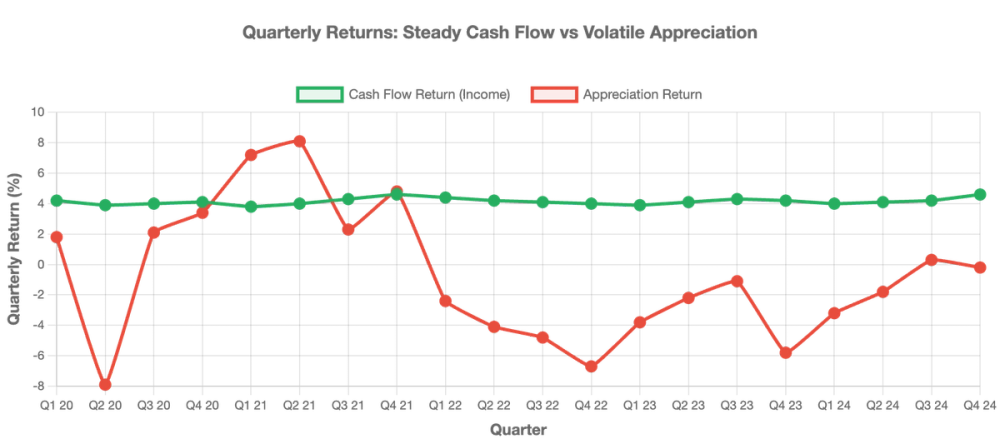
When it comes to building wealth through real estate, investors are often torn between two paths: investing for appreciation or investing for cash flow. Appreciation, the increase in property value over time, can lead to substantial paper gains, but it's inherently speculative. Cash flow, on the other hand, represents consistent, predictable income from day one.
In an era of fluctuating markets, rising interest rates, and tighter lending standards, relying solely on appreciation is a gamble many investors can no longer afford to take. Increasingly, seasoned investors are turning back to basics: prioritizing rental income and cash-on-cash returns that provide real-world financial security.
"Cash flow is the lifeblood of real estate investing—it keeps your business alive while you wait for the market to mature."
— BiggerPockets
Positive cash flow means your rental property earns more than it costs to operate. This includes covering mortgage payments, property taxes, insurance, maintenance, and vacancy buffers. The leftover income, your cash flow, is spendable, reinvestable, and sustainable regardless of market swings.
In contrast, appreciation relies on forces entirely outside your control. While a rising market can certainly pad your net worth, it's far from guaranteed. Recent data from Zillow indicates that several previously hot real estate markets, such as Boise, Austin, and Phoenix, have seen notable price corrections in 2024 and 2025.
"Strong cash flow attracts buyers. Empty promises of value growth don't."
— Roofstock Academy
Evaluating properties based on cash-on-cash return—your annual pre-tax cash flow divided by the amount of cash you invested—is one of the most grounded ways to assess a deal. For example, if you earn $20,000 per year from a property that required a $200,000 cash investment, you're earning a 10% cash-on-cash return.